

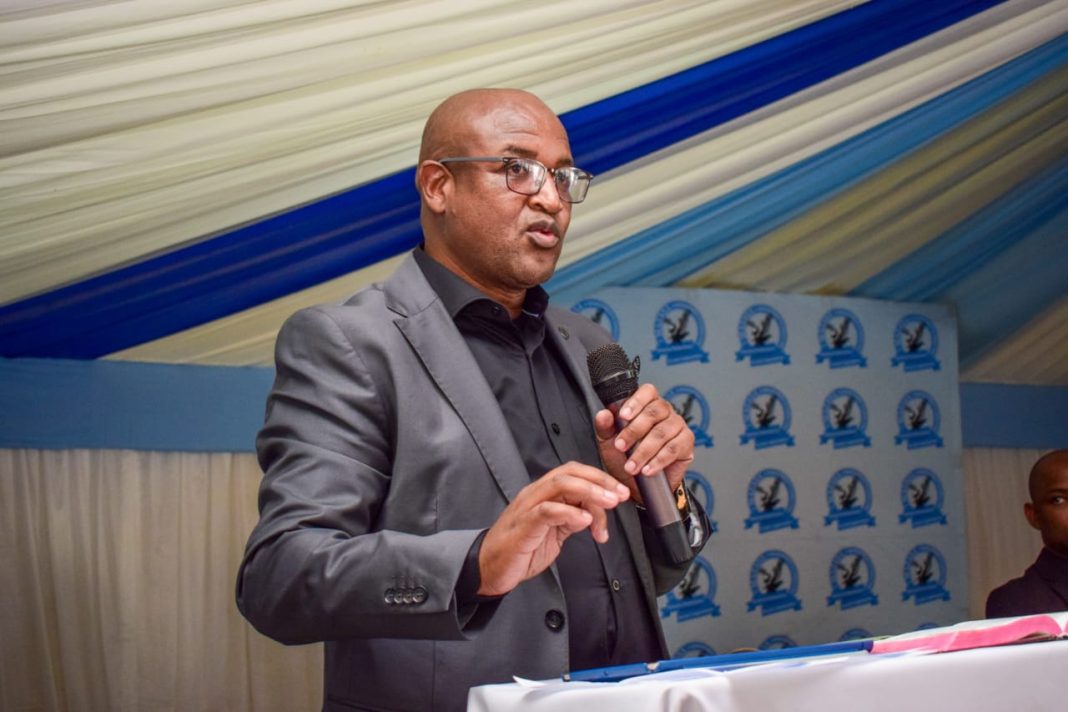
The President of the Matatiele Business Chamber, Zolile Mosweu, has strongly criticised the Matatiele Local Municipality for allocating only R200 000 towards the support of small businesses in its newly adopted R694,9 million budget.
On Thursday, the Matatiele Local Municipality Council adopted its annual budget, but the allocation towards Micro, Small and Medium Enterprises (MSMEs) immediately sparked criticism from local business leaders, who described the amount as inadequate and disconnected from the realities faced by local entrepreneurs.
Reacting to the budget, Mosweu said the allocation represented only 0.03% of the municipality’s total budget and reflected what he described as a lack of commitment towards job creation and economic development.
“That R200 000 out of R694.9 million tells the whole story. In a municipality where most people survive through informal trade and small businesses, this budget cannot be described as pro-poor or pro-jobs. It sends a message that job creation is not a priority,” said Mosweu.
He argued that MSMEs remain the backbone of local economic activity, particularly through spaza shops, street vendors, informal traders, and small service providers. However, he said these businesses require more than verbal support to survive and create employment opportunities.
“Small businesses need working capital, market access, training opportunities and affordable trading space. R200 000 cannot meaningfully address any of these challenges across the entire municipality,” he added.
Mosweu further criticised what he described as serious institutional gaps within the municipality’s Local Economic Development (LED) unit. According to him, the municipality lacks reliable data on the number of MSMEs operating in Matatiele and the specific challenges they face.
“If there is no database of local MSMEs and their actual needs, then any support programme becomes guesswork. You cannot effectively support spaza shops or informal traders if you do not know how many exist, where they operate, or what obstacles they face daily,” he said.
He also raised concerns about the high cost of rentals and the shortage of affordable trading sites for small businesses. According to Mosweu, expensive rental costs continue to force many entrepreneurs into informal and unstable trading conditions, ultimately threatening job creation.
“Exorbitant rentals are killing small businesses. If the municipality is not making land and affordable trading spaces available, then it is effectively pushing traders out of business,” he said.
Mosweu said the budget allocation also raises concerns about how informal traders are viewed by local authorities.
“The budget tells us whether informal traders are seen as part of the economy or merely as a nuisance. This allocation suggests the latter,” he stated.
He further linked the issue to broader concerns about the effectiveness of local government in driving economic growth.
“You cannot speak about fixing local government while municipalities continue to neglect MSMEs. National and provincial programmes will never succeed if municipalities are not budgeting properly, collecting data, and providing basic support infrastructure for local businesses,” he said.
When questioned whether the municipality’s LED unit keeps records of how many spaza shops or informal traders have been supported in previous years, Mosweu responded: “The answer is a big no.”
The municipality has not yet publicly responded to the criticism.
No tags for this post.