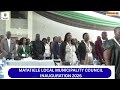


Matatiele Local Municipality has defended its decision to host its newly elected Council’s induction programme in Durban, KwaZulu-Natal, saying the initiative is aimed at strengthening municipal leadership, improving governance and drawing practical lessons from successful urban development models.
Matatiele Local Municipality Manager, Advocate Mothosi Lepheane, said the programme, scheduled to take place from 6 to 9 December 2026, forms part of the municipality’s broader efforts to prepare its new Council for the responsibility of steering Matatiele’s development over the next five years.
Following the 2026 Local Government Elections, the municipality welcomed a new Council that will be entrusted with providing political leadership and guiding the municipality’s development priorities during the new term of office.
Advocate Lepheane said the induction programme would cover governance and legislative responsibilities, institutional capacity building, benchmarking, exposure visits, knowledge exchange and strategic engagements.
The programme is expected to accommodate more than 80 participants, including councillors, municipal officials, facilitators, representatives of government departments and external institutions.
Addressing questions surrounding the decision to hold the programme in Durban, Lepheane said the choice of venue was informed by developmental, logistical and financial considerations.
He explained that some establishments within the municipality’s region charge significantly higher rates than comparable facilities elsewhere in the Eastern Cape and KwaZulu-Natal.
He further pointed out that Matatiele’s geographical location along the KwaZulu-Natal border means that travelling to certain major centres in the Eastern Cape could result in longer distances, increased subsistence and travel claims, as well as additional transport costs.
However, Lepheane said the Durban programme was not simply about accommodating councillors and municipal officials, but also presented an opportunity to expose the new leadership to practical examples of successful urban development.
He said the municipality wanted to draw lessons from established urban centres such as uMhlanga and Sandton as part of its ambition to transform Matatiele into a modern, well-planned and economically vibrant town capable of attracting investment and improving residents’ quality of life.
As part of the programme, councillors will participate in developmental exposure visits to selected sites in uMhlanga and other parts of eThekwini.
These visits will focus on town planning, urban development, road infrastructure and maintenance, housing development, investment attraction, public space management and effective municipal administration.
According to Lepheane, the objective is to identify innovative and practical approaches that could be adapted to address Matatiele’s own developmental challenges and opportunities.
He also revealed that the municipality is planning a further benchmarking and knowledge exchange visit to Sandton early in 2027.
The proposed delegation will include the Mayor, relevant Portfolio Heads, senior management and representatives of the local business community.
Lepheane said the Sandton engagement would focus on strengthening strategic partnerships, exploring investment opportunities and encouraging greater cooperation between the municipality and the business sector.
He emphasised that the Durban induction programme and the planned Sandton visit form part of a broader strategy to build a capable, innovative and development-oriented municipality.
“We are not merely inducting Councillors for a five-year term of office; we are preparing a leadership collective entrusted with shaping a better future for Matatiele and its people,” said Lepheane.
No tags for this post.